This image includes a non random selection of my facebook status comments during 2009 (you can find the FB app under “my year in status”). Egocentric, yes but a bit therapeutic, too.


This image includes a non random selection of my facebook status comments during 2009 (you can find the FB app under “my year in status”). Egocentric, yes but a bit therapeutic, too.
This is from The Brookings Institution–(check the links to the conference papers below!) The conference brought together a great group of micro and macroeconomists.
Bill Easterly and Jessica Cohen of Brookings recently convened a conference with leading development experts to explore one of the most vexing issues of global development: what do we really know about what works and what doesn’t when fighting global poverty? The conference focused on the ongoing debate over which paths to development really maximize results: a big-picture approach focusing on the role of institutions, macroeconomic policies, growth strategies and other country-level factors; or a more grassroots approach focusing on particular microeconomic interventions such as conditional cash transfers, bed nets, teaching materials and other micro-level improvements in service delivery on the ground.
CONFERENCE PAPERS:
In a very interesting piece on the fallacy of taking “the normative model of education as a true positive model” (NAP), Lant Pritchett cites Pigou:
“It is not sufficient to contrast the imperfect adjustments of unfettered enterprise with the best adjustment economists in their studies can imagine. For we cannot expect that any State authority will attain, or will even wholeheartedly seek, that ideal. Such authorities are liable alike to ignorance, to sectional pressure, and the personal corruption by private interest.”
The whole piece is here:
The Policy Irrelevance of the Economics of Education: Is ‘Normative as Positive’ Just Useless, or is it Worse?
Lant Pritchett (Harvard University, Kennedy School of Government).
Este es el poll of polls de aprobación presidencial de Felipe Calderón de 2007 a 2009, incluyendo Reforma, Universal, consulta Mitofsky y un promedio. Agradezco la ayuda de Carlos Martínez en la preparación de esta gráfica.
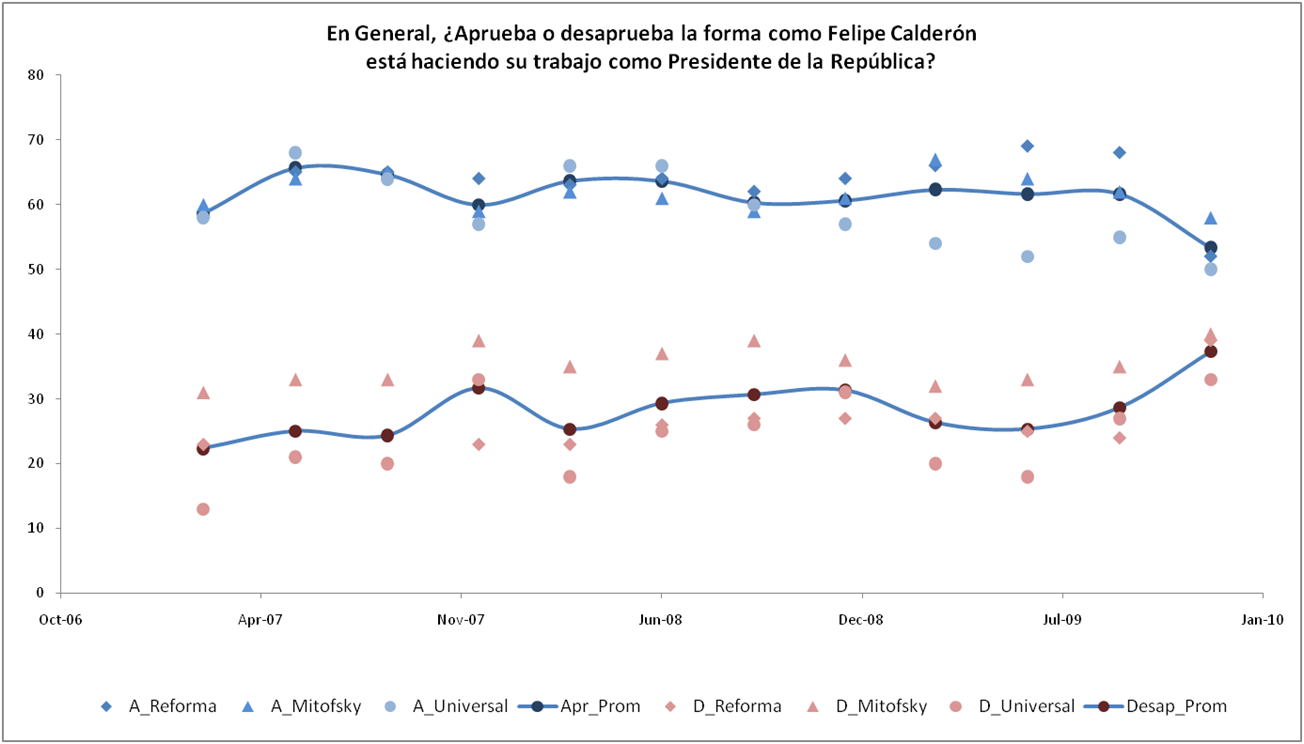
Aprobación presidencial Felipe Calderón 2007-2009
 Javier Aparicio dot net